
What just changed?
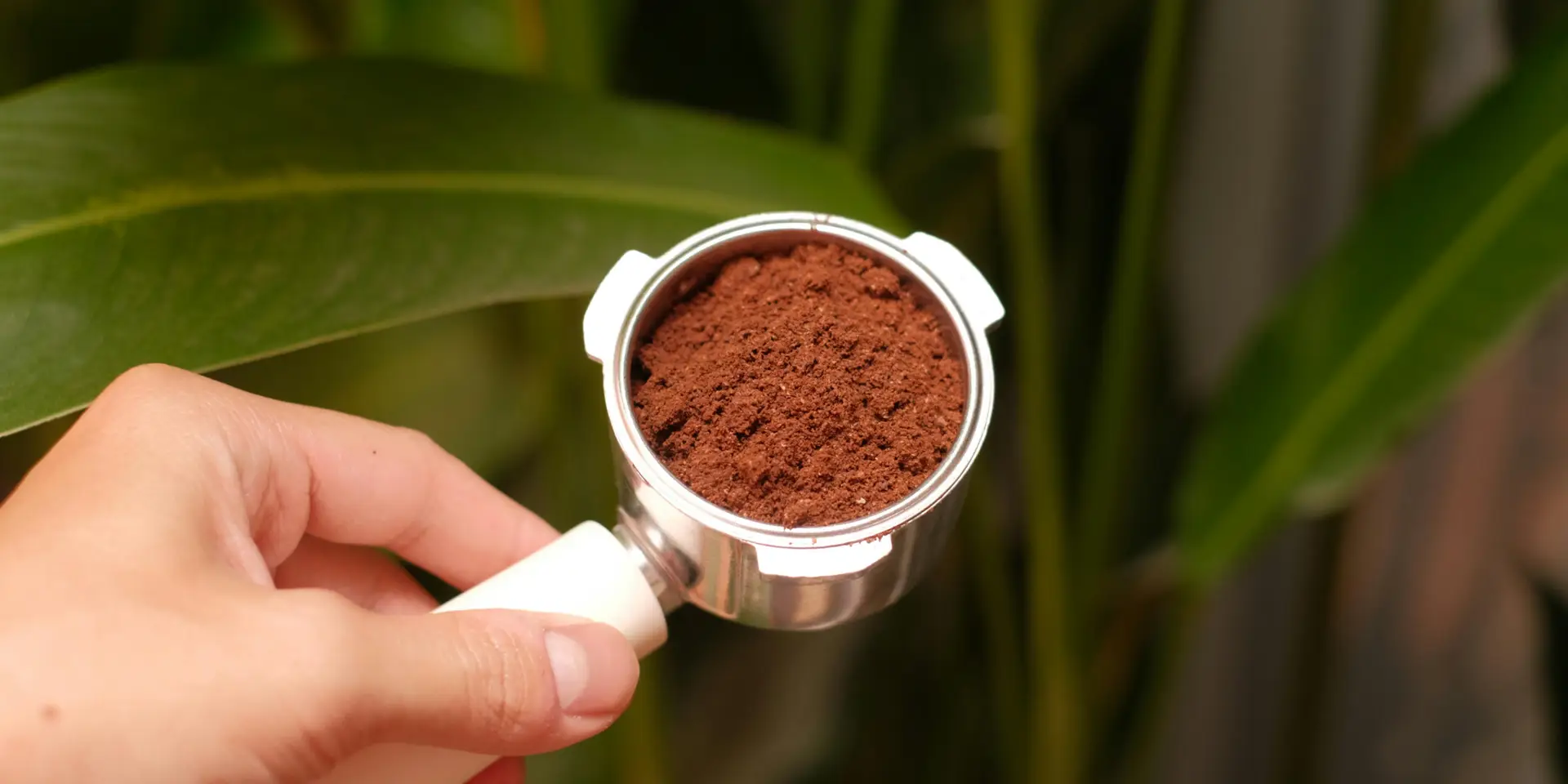
Nobody sets out to make coffee grounds. You brew coffee, and the grounds are what is left in the machine. For years that made them waste by default, because no Dutch or European rule said otherwise.
That has now shifted. The Omgevingsdienst Noordzeekanaalgebied has concluded that the spent coffee grounds Caffe Inc. collects and processes can be regarded as a bijproduct (by-product). The legal assessment (rechtsoordeel) covers our use of the grounds for cosmetic oil production. Caffe Inc. is the first company in the Netherlands to achieve this status for spent coffee grounds.
Waste or bijproduct (by-product)? In plain words.
- Waste: something you throw away, or plan to
- Bijproduct (by-product): the residue generated while making a separate ‘main’ product
Take brewing coffee. The goal is the coffee, and the grounds are the leftover. Headed for the bin, they are waste. Headed for a processor that turns them into coffee oil for cosmetics, they can be a bijproduct (by-product), as long as four conditions are met:
- There is a use-case
- They need no more than normal processing
- The grounds are generated from coffee brewing itself
- The use is lawful and safe
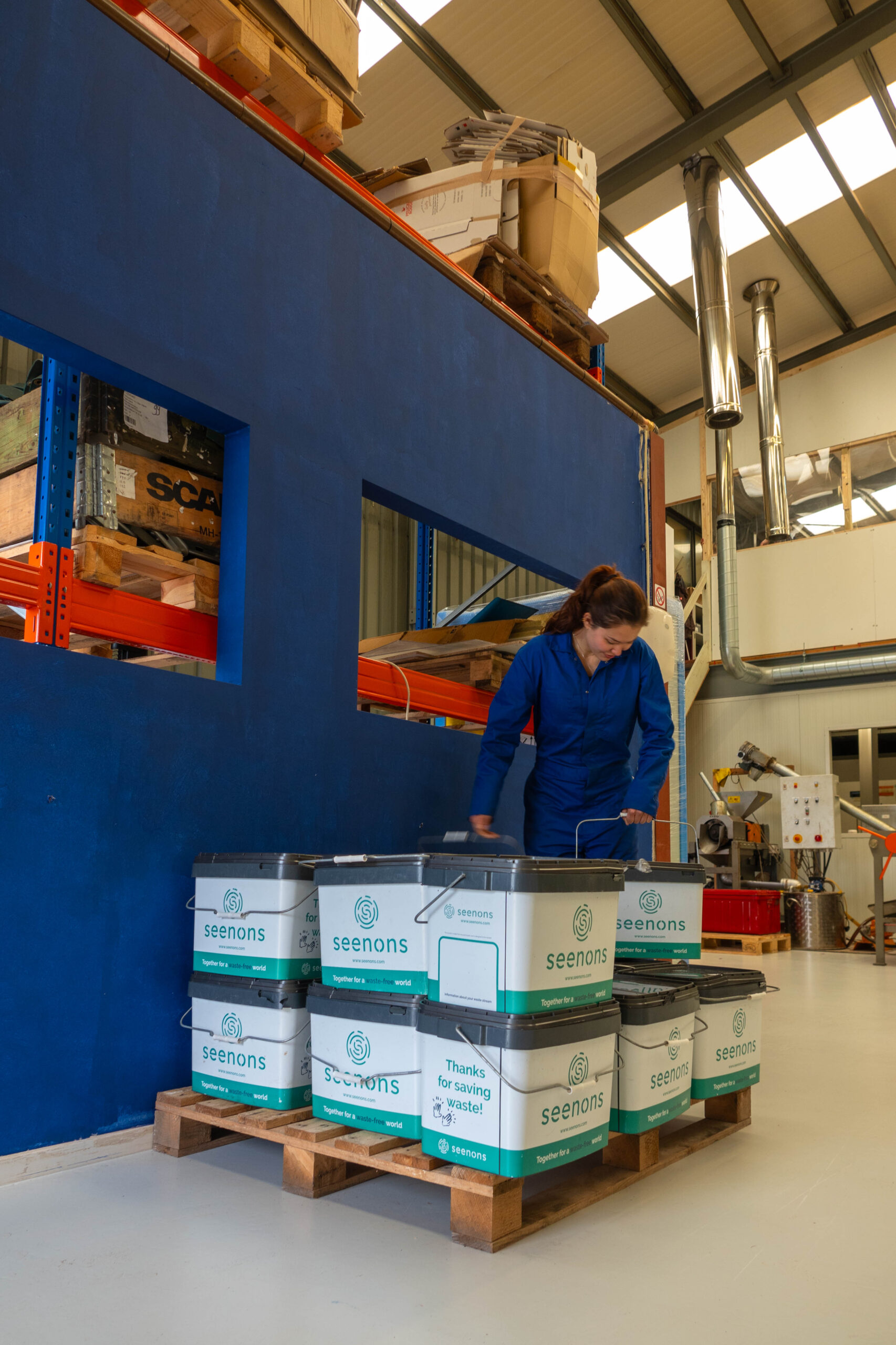
Above all, the assessment looks closely at how the material is viewed and treated by each stakeholder involved. From the waste managers of each building, to the people emptying the coffee machines and collecting the buckets, everyone involved understands that the material is used as a new resource.
That is the biggest distinction from ‘waste’ to ‘not waste’. Caffe Inc. does not collect coffee grounds out of random green bins. The fact that it is such a controlled process allowed us to achieve the bijproduct status.
This is a legal story before it is a sustainability story. Under waste law, a material counts as waste once its holder discards it. Permits, transport and reporting rules then follow, however safe and useful the material is. That is the paradox circular companies run into: upcycling can be harder than using a virgin material, simply because of how the law classifies it.
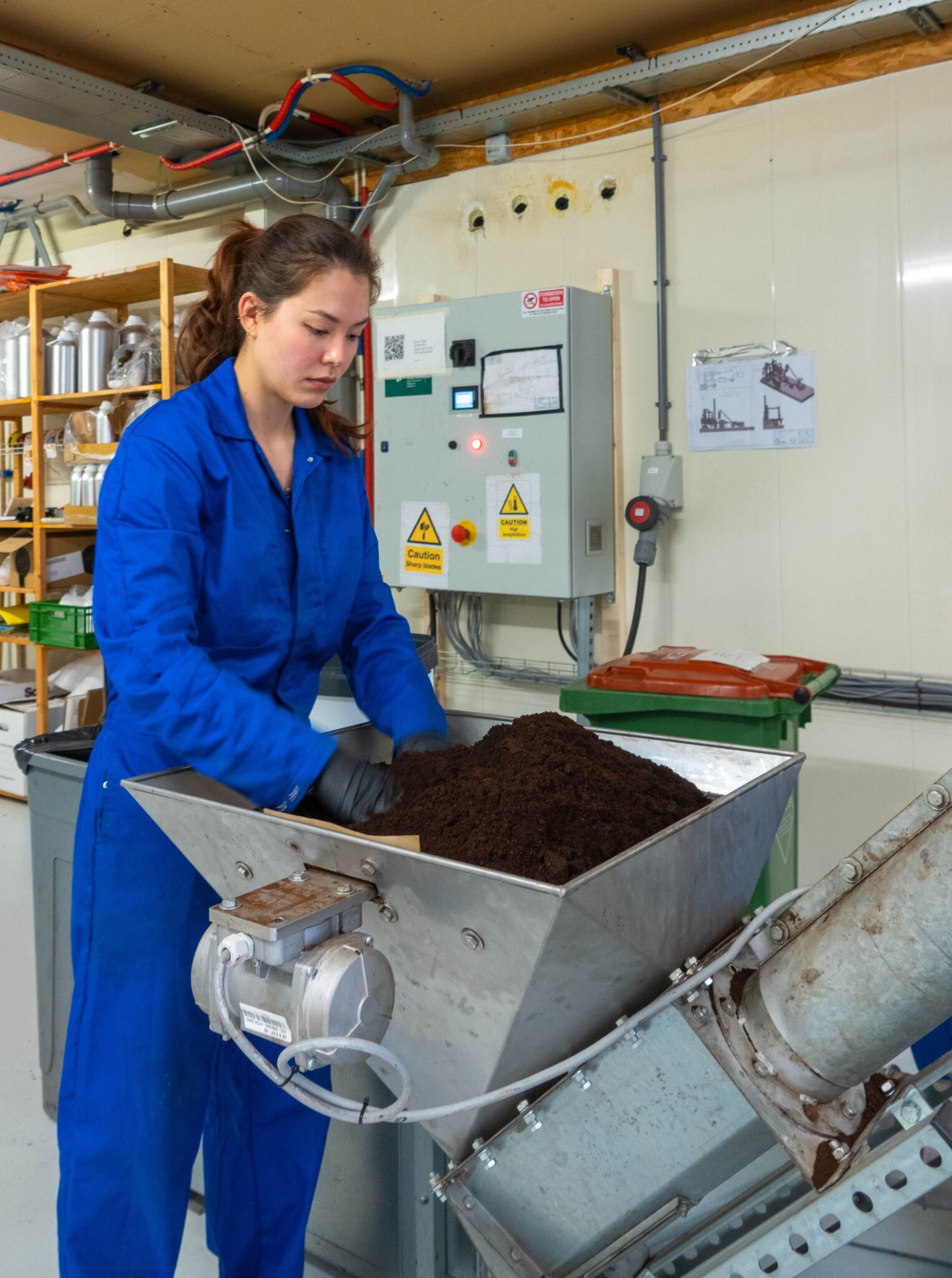
Our process did not change much before and after achieving bijproduct (by-product) status, other than clearer documentation. Our products and quality have not changed either.
For spent coffee grounds, there are currently no European or Dutch criteria that settle their status. The Omgevingsdienst assessed them case by case, which is encouraging to see. It points to a system that is starting to make room for circular feedstocks.
‘Coffee grounds’ have been recognised as another type of ‘non-waste’ in some rare cases, such as the ‘Voortgezet gebruik’ (continued use) status for mushroom cultivation. Bijproduct (by-product) status, however, is a first for spent coffee grounds.
Why it matters
A bijproduct (by-product) is not waste by definition, which brings the grounds a step closer to being a raw material. For suppliers, it means the grounds can now be described as a non-waste stream in their own reporting.
A shared step forward
This isn’t only our result. It took many parties to get here, and we’re grateful to:
The Omgevingsdienst Noordzeekanaalgebied, for working through the case in detail
Tom Houben (Haskoning) and Tom Blommaart (Renewi), for their support and guidance
Rotterzwam, for their generous tips and tricks when we started the process
Our suppliers, who separate coffee at the source
And a Dutch framework that is increasingly open to circular feedstocks.
Back to our purpose
In November 2025, Caffe Inc. submitted feedback to the European Commission’s call for evidence on the upcoming Circular Economy Act. Our message: certified circular feedstocks deserve the same legal standing as primary materials, supported by a fast, EU-wide certification route. This assessment illustrates why.
A world without coffee waste is not only about how many tonnes we process. It is about how the grounds are seen: as a material with a place in the supply chain, not something to dispose of. Bijproduct (by-product) status changes that starting point for everyone who handles them, and that makes it a big step forward.
This status is currently being validated at national level.
From the grounds up!